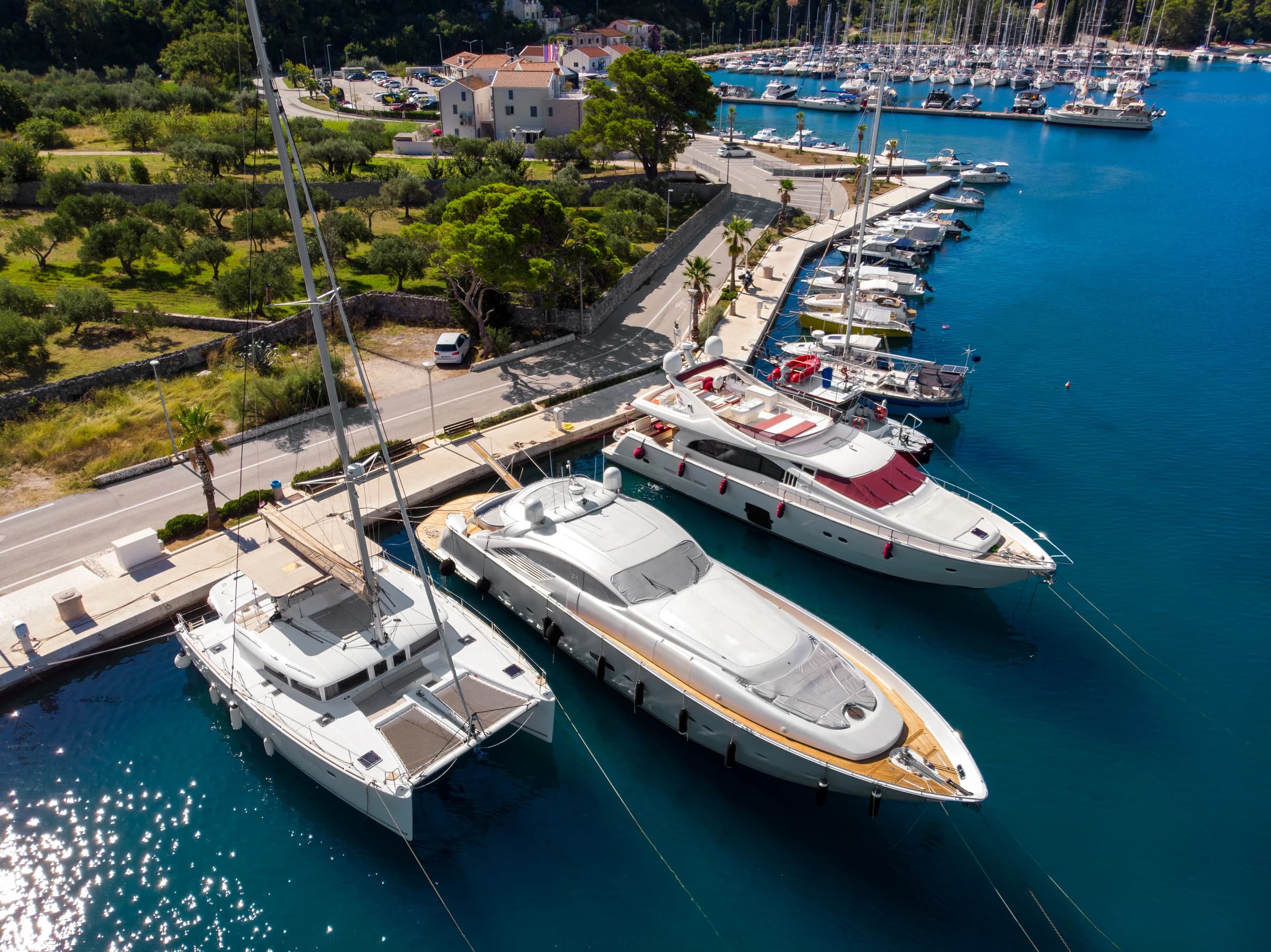
As part of its July 2026 review of the EU Emissions Trading System (EU ETS), the European Commission has put forward a proposal that concerns a real share of the professional yachting fleet: extending the scheme to vessels between 400 and 5,000 gross tonnage (GT), starting in 2031. The proposal was reported on 16 September by SuperyachtNews, in an analysis by Engel-Jan de Boer, Global Yacht Segment Manager at Lloyd's Register, the classification society that advises the sector on regulatory matters.
What the proposal actually says
Since 2024, the maritime EU ETS has applied to vessels of 5,000 GT and above, a category that until now covered only the largest units. A separate monitoring, reporting and verification (MRV) framework had already been extended to some vessels below that threshold. The July 2026 review goes further: it proposes bringing vessels between 400 and 5,000 GT into the carbon pricing scheme itself, not just into a reporting obligation. At this stage, the text remains a Commission proposal. Adoption still depends on EU Member States and the European Parliament, and the proposed 2031 timeline remains open to negotiation.
Which units in the 20-60 metre range would be affected
Gross tonnage measures interior volume, not length: two yachts of similar size can show very different GT figures depending on their design. There is no strict conversion between metres and tonnes. Broadly speaking, though, the 400 GT threshold tends to fall in the upper half of the 20-60 metre segment, where interior volume is greatest. A meaningful share of the fleet in that range could therefore, over time, move into a framework so far reserved for the largest superyachts.
What this changes on board
Nothing is mandatory today: the proposal is still under discussion and the 2031 horizon leaves time. But de Boer points to a pattern the sector has already lived through with IMO Tier III emissions rules and the Maritime Labour Convention: owners who engaged early were able to plan their investments, while those who waited ended up complying under time pressure. For an owner or captain of a 20 to 60 metre yacht, the immediate value is not reacting to a tax that does not yet exist, but starting to track fuel consumption and emissions in a structured way. Choices already made around hybrid propulsion, on-board energy storage or shore power connections take on extra weight: in a system where carbon cost is tied directly to consumption, energy efficiency becomes a financial criterion as much as a technical one. Following the EU negotiations on this text, rather than waiting for it to be published, makes it possible to meet a future rule change without being caught off guard.
The background